
Trudeau Institute expands science-based learning in Saranac Lake High Schools
SARANAC LAKE, NY. Thanks to funding through the Cloud Splitter Foundation, the Trudeau Institute is now expanding opportunities for science-based learning to high school students throughout the North Country.
“In the past, high schools would contact us directly, and we would offer tours of the institute and a short presentation on the research being conducted here,” said Dr. Deb Brown, director of educational programs and principal investigator at Trudeau Institute. “Now, we’re looking to expand these programs and make them more formalized.”
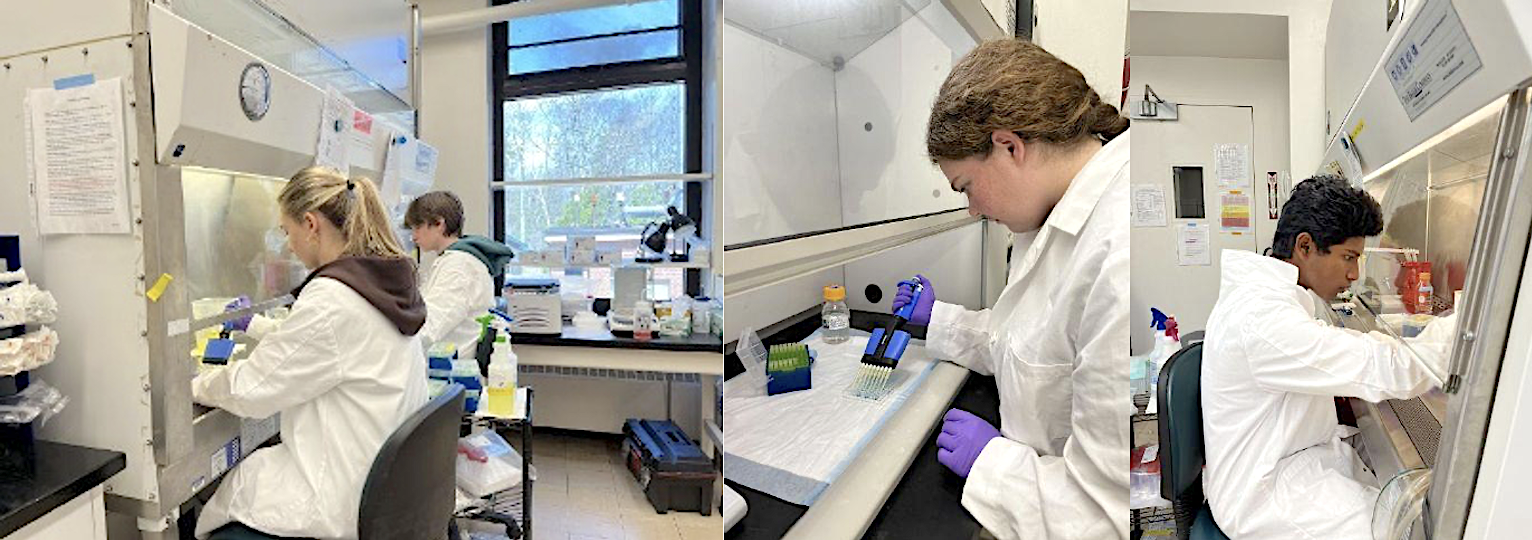
Two programs to benefit from this additional funding include “Science Behind the Scenes,” a career exploration module that is expanding to serve four to five classes per year, and “ELISA in Action,” a lab immersion module that students from Saranac Lake, Lake Placid, and the BOCES New Vision Program have already experienced.
“Through these programs, students can see the working environment by interacting directly with scientists and learning how essential core facilities keep research moving forward,” stated Dr. Brown. “Together, these experiences help students envision themselves in STEM careers and understand the skills needed to succeed.”
The “Science Behind the Scenes” module gives high school students an inside look at the full spectrum of careers at Trudeau Institute, from animal care and core facility technicians to PhD-level scientists. After listening to a series of short, engaging lectures, students are given a guided tour of the Institute’s labs, including its state-of-the-art confocal microscope, where they can witness host-pathogen interactions at the cellular level.
In the “ELISA in Action” module, students are immersed in the day-to-day workings of a lab. They work side-by-side with scientists in the lab, learning the principles of the ELISA technique, a standard laboratory test used to detect antibodies in blood, and then execute the procedure to test for vaccine-induced antibodies in blood samples. With this program, students not only experience the pace of scientific work but also develop networking and communication skills essential to their futures.
While the Trudeau Institute can accommodate up to 25 to 30 people for “Science Behind the Scenes,” the lab immersion module works best with two to three students at a time. Those students will need to spend a day and a half at the Institute to learn safety measures and complete the assay.
“We have several expanding programs that we want to do, one being a career mentoring program where we follow students from high school through post-graduate or professional school,” said Brown regarding the future of the educational offerings at Trudeau Institute. This non-profit biomedical research organization was established in 1884, initially focused on tuberculosis, and eventually expanded to include other infectious diseases, such as influenza, dengue/Zika viruses, and bacterial pathogens. “It’s all very exciting.”